
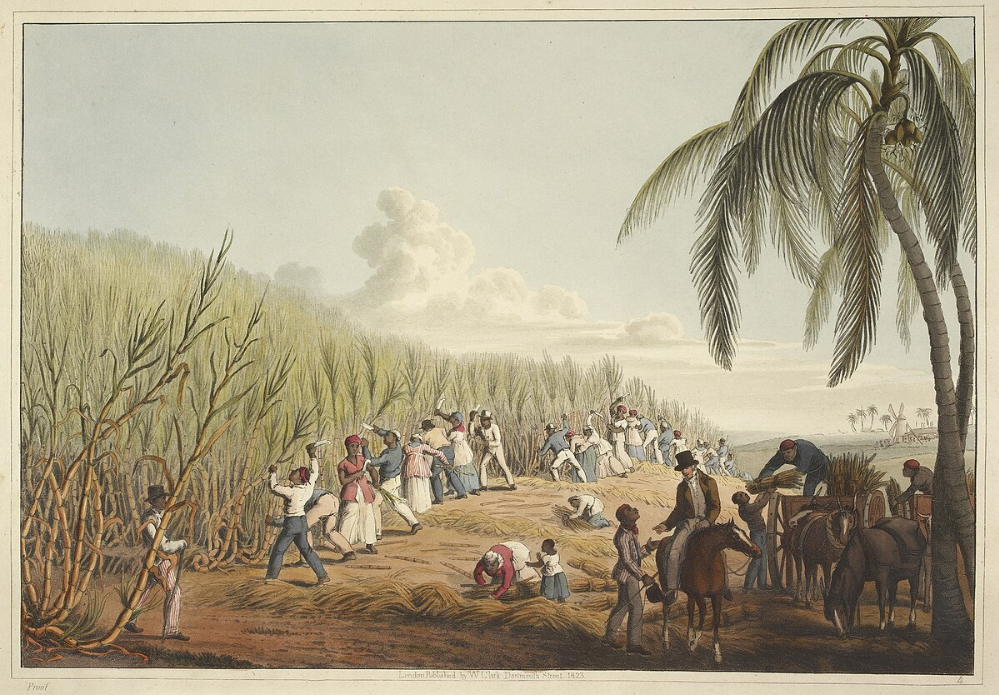
This essay was originally written for the History 600: Global Slavery Seminar course at the University of Wisconsin-Madison. The essay was also submitted for review in the MUCH (Madison Undergraduate Conference on the Humanities) Essay Competition.
Introduction
This paper analyzes an Indian case that illustrates economic motivations for the exportation of abolitionism, offering deeper insights into the global perspective of the abolitionist movement. Following the abolition of slavery in Britain in 1833 and the end of the apprenticeship system in 1838 in Britain and most of its colonies, abolitionists turned their attention to promoting abolition in regions under British influence, which parallels the expansion of the British colonial empire. While there are fruitful studies which analyze British abolitionism’s global perspectives and its connection to colonialism, 1 the context of East India and the interplay of multiple imperatives is rarely discussed.
This paper begins by situating British abolitionism within Enlightenment ideals, exploring its emergence as both a moral movement and a tool for economic and imperial objectives. The first section examines abolitionist rhetoric against "slave sugar" from the West Indies and the framing of "free sugar" from East India, highlighting the economic assumptions behind such advocacy. It then examines the global demand for cash crops and how East Indian labor was rebranded as "free" to support abolitionist calls for free trade. Central to the analysis is the debate between "slave sugar" from the West Indies and "free sugar" from East India, where abolitionists like Thomas Clarkson, William Wilberforce, and James Cropper argued for the economic and moral superiority of East Indian free labor. Further, it explores the aftermath of abolition, analyzing the ways colonial policies continued exploiting labor while redefining it for economic goals. By comparing the dynamics of abolitionism in India, West Africa, and the West Indies, this paper concludes with a global perspective, applying Karl Polanyi’s “Great Transformation” model—which describes how market systems came to dominate and reshape social relations—to explain how abolitionism contributed to the emergence of a homogenized global labor market.
In this paper, I draw on primary documents like pamphlets, speeches by abolitionists such as Clarkson and Wilberforce, parliamentary records, and contemporary newspapers like the Liverpool Mercury and the Anti-Slavery Monthly Reporter in the early 19th century, and particularly use discourse analysis to uncover the underlying motivations of actors behind their rhetoric in abolition movement. Additionally, I employ contemporary scholarly work that deals with East Indian slavery, the British anti-slavery movement, and post-colonial theories to connect this case with the bigger trend of global abolitionism and its relevance to economic and colonial interests in an effort to provide postcolonial interpretations of a formerly colonial perspective.
Abolitionist Enlightenment Rhetoric and East Indian Sugar
Scholars like Christopher Brown argue that British abolitionists framed their polemics against slavery around the brutality of the slave trade and the harsh conditions endured by enslaved individuals from the late 18th century until its abolition in 1833.2 Such argument is not without bases. British abolitionists indeed championed humanity and justice in their writings and speeches when appealing to the public. In the preface to his seminal Essay on the Slavery and Commerce of the Human Species, Thomas Clarkson praised the morality and humanitarian values of the American Quakers, whom he credited as the first to acknowledge the cruelty of slavery and abolish the practice.3 He continued to emphasize humanity as the core of his advocacy in another essay published in 1823, stating, "I know of no subject where humanity and justice, as well as public and private interest, would be more intimately united than in that which should recommend a mitigation of slavery…”4 William Wilberforce similarly highlighted inequality as the fundamental evil in the African slave trade during his 1789 Abolition Speech in the British Parliament and held this view until his death in 1825.5 The moral integrity and admirable humanitarian spirit of these early abolitionists are evident. These polemics were effective in pressuring the government to pursue anti-slavery policies both domestically and internationally. For example, Kielstra contended that British Foreign Secretary Palmerston's decision to forcibly suppress the Portuguese slave trade in August 1839 was driven by parliamentary pressure from abolitionists, along with influence from national newspapers and public opinion.6
However, examining one specific debate driven by abolitionists against “slave sugar” from the West Indies and their preference for “free sugar” from East India reveals another dimension of abolitionist strategies and motivations. The complex and less familiar institutions of East Indian slavery were intentionally rebranded as free labor, enabling policies that promoted free trade and tax reductions to undermine the market for West Indian “slave sugar.”
The outstanding unfree nature of West Indian sugar has been recognized along with other products of slave labor in the abolitionists’ writings; however, one can see how economic philosophy such as competition and free trade became an essential polemic used by the abolitionists.7 In a pamphlet titled Reasons to Use East India Sugar, an anonymous author encouraged the readers to boycott West Indian sugar by saying that “it has been ascertained that the abstinence of one tenth of the inhabitants of this country from West India Sugar would abolish West Indian Slavery.”8 This might just be a line to appeal for public activism, but one should be able to see the economic assumption: that through boycotting, the West Indian slave economy will fail by itself. This economic philosophy is held by many prominent colonial abolitionists reading Adam Smith and David Hume. They believe that free labor is fundamentally supreme to slave labor, for it increases productivity, and that through fair competition, freedom would prevail.9
The notion that free wage labor could be more economical than slave labor may seem counterintuitive. To support this argument, abolitionists advocating for East Indian sugar presented various reasons, such as “the fertility of the soil, the facility of irrigation, the ease with which commodities are transported by means of an extensive inland navigation, and the abundance of provisions.”10 However, recognizing that these arguments alone might not be sufficiently persuasive, abolitionists conducted further research and published a pamphlet titled East India Sugar, or an Inquiry Respecting the Means of Improving the Quality and Reducing the Cost of Sugar Raised by Free Labour. In the pamphlet's appendix, Mr. Botham, an experienced manager of sugar estate in the West Indies, stated: “Having experienced the difference of labourers for profit and labourers from force, I can assert, that the savings by the former are very considerable.”11 He further emphasized, “Let it be considered how much labour is lost by the persons overseeing the forced labourer, which is saved when he works for his own profit. I have stated, with the strictest veracity, a plain matter of fact; that sugar estates can be worked cheaper by free persons than slaves.”12 Despite the disadvantages of current East Indian production methods and the protective tariffs favoring West Indian sugar due to the Navigation Acts, the pamphlet argued that free labor, when properly managed, could potentially match or surpass the economic output of slave labor systems. The question arises: was the East Indian labor system truly as “uncontaminated” as abolitionists claimed?
Debates on the Nature of East Indian Labor
T.F. responded in a series of three consecutive publications in the same newspaper. He first addressed Cropper’s argument on competition, stating that while East Indian sugar could, and perhaps should, compete in foreign markets to reduce reliance on slave produced sugar, it should not be allowed to compete in Britain’s home market against British West Indian sugar.16 T.F. prioritizes the economic protection of British colonial interests over Cropper’s call for lower domestic prices and free competition. T.F. then moved to the issue of free labor, which is central to this discussion. He rejects Cropper’s assertion that East Indian laborers are truly free, describing their condition as “slavery of another and a peculiar kind.”17 He elaborates: “There is perhaps not a more depressed or abject race of men in the world than the lower ranks of the Hindoos.”18 T.F. further undermines Cropper’s argument by highlighting the severe economic hardships faced by East Indian laborers, stating they are “[r]educed to the very lowest pittance that in a warm climate and a country naturally fertile, will afford the means of preserving life and continuing the species.”19 To reinforce his point, T.F. provides an eyewitness account of labor conditions in Bengal, illustrating that East Indian labor is no more humane than that in the West Indies:
“In the province of Bengal, the land is said to be held by extensive proprietors called Zemindars, who re-let it in smaller portions to superior tenants or tacksmen, there called Izarders, and they again in small farms to sub-tenants called Ryoss, who are the actual occupiers of the soil. The effect of this system of sub-letting lands on the condition of the Ryoss is said to be that ‘a man of this class of society has no idea of any property attaching to himself. He slaves for the benefit of others without hope of improving his condition or providing for age or infirmity. If he attempts to improve the value of his cultivation by a change of produce or better management, the native Izarder instantly assesses him to the full amount of the surplus production.’ But if the Ryoss are poor, there is still a poorer class, the Coolies, who are the laborers, and whose wages are said (it is impossible to read it without compassion) not to exceed 3d. sterling per day. The Ryot and his family, however, work themselves and employ Coolies only to assist them occasionally.”20
T.F. concludes his argument with a final repudiation of Cropper’s moral stance, asserting, “Let us hear no more of the superior humanity of employing labourers at 3d. per day in the East, rather than slaves in the West.” This response illustrates T.F.’s belief, which is shared among supporters of West Indian sugar, that East Indian labor is not morally superior to West Indian slavery, as both systems involve severe exploitation.21 Though T.F. was probably primarily defending his interest as a West Indian planter, his words were not void of truth. Looking at the contemporary work of East India’s complex slavery regime, one might realize how far from the reality Cropper’s assertion of East Indian labor being free was.
The Complexity of East Indian Slavery
Given Cropper’s close involvement with both East Indian and West Indian slavery issues in the political realm continuously from the 1820s to the 30s, it seems improbable that he was unaware of such literature.26 Yet he continued to assert the “freedom” of East Indian sugar labor and advocate for free trade and lower duties well into the early 1830s.27 Cropper’s initiative for free trade in East India did not achieve complete success in dismantling West Indian monopoly or shifting the British market decisively towards East Indian sugar.28 In addition, a better understanding of East India slavery was revealed in front of the British public by 1840s, when the First World Anti-Slavery Convention in London passed several resolutions denouncing slavery in India. With these better understandings of the reality, slavery in East India was gradually abolished started with outlawing slave-trading in Jaipur in 1839 and ended with the slave status abolished in 1847.29
Aftermath of Abolition: The Global Great Transformation
During the 1830s, while Cropper was advocating for East Indian “free sugar”, the EIC officers began demanding that monastic servants, who had previously been exempt from third-party labor, contribute to colonial armies or pay cash taxes. Monastic leaders resisted, often preferring financial penalties over allowing their servants to be conscripted. This marked the beginning of efforts to dismantle traditional systems of labor protection and redirect these populations toward colonial economic and military objectives.30 By the 1840s, these policies expanded to all regions annexed by the EIC, as private British traders and industrialists, following the loss of the Company’s trade monopoly in 1833, sought to exploit lands for cash crop production. These efforts further intensified demands for bonded labor, often under harsher conditions than pre-colonial systems.31 The abolition of slavery institute could not prevent the continued exploitation of cheap laborers. The formal alternation of the categories of the labor employed couldn’t fundamentally improve the conditions of the labors, and sometimes even worsen their situation.
As demonstrated by the rendering of monastic servants, who were viewed by the British as slaves, into tax paying population, British colonial policies aimed at "liberation" often disregarded long-standing Hindu and Muslim traditions. For instance, by the 1840s and 1850s, colonial administrators redirected skilled and bonded laborers—many from Hindu and Muslim communities—into roles dictated by industrial and colonial priorities. In 1856, after the annexation of Awadh, a region in northern India, African members of the Shi’a court who had held positions of trust were reassigned to menial jobs as sweepers and wardens under colonial rule.32 These policies stripped individuals of their social status and subverted indigenous systems of patronage, replacing them with structures that served the colonial state. These cases efficiently illustrate the British colonial power's attempts to dominate not only the economic order, but also the minds and systems of indigenous societies through the imposition of "liberation" policies.
It is unsurprising that the Anti-Slavery Reporter, a staunch advocate for exporting abolitionism overseas, aligned itself with colonial interests in this instance. In 1856, as monastic servants were subjected to imperial taxation and subsequently pressured into cash crop production, former court members—reclassified as slaves by colonial authorities—were demoted to menial roles; the Anti-Slavery Reporter celebrated these developments as "Signs of Progress." The publication lauded the alignment of "the immense monetary power of the East India Company" with the cause of abolition, specifically highlighting the success of "Free-Labour Products," such as East Indian sugar, over French beet sugar in continental markets.33 The metropole abolitionist newspaper’s ideology, and more broadly the western abolitionists in general at the time, only advocated for the liberation to incorporate the enslaved and the enslaver’s societies into the global order they initiated. The abolitionism set off by Enlightenment ideas unconsciously functioned as the tool for the creation of a global economic order.
Comparing the aftermath of British exported abolitionism in East India, with its dynamics in the West Indies and West Africa, one begins to see a resonating theme regardless of geographical delineation. In other words, the discourse of abolitionism is unconsciously creating a global order that aims at homogenizing laborers of all sorts into workers in a global market, which needs to be formally equal. Catherine Hall’s works suggest that the abolition movements in the West Indies aimed at converting former slaves into Anglo Saxons, like the workers of metropole Britain.34 Christopher Brown, in the case of West Africa, also stresses that abolitionists imagined the future of Africa as a center of agricultural center rather than human exportation, contributing its part in the global economy.35
This shared phenomenon where the economic economy disguised by reconstruction social order is theorized by Karl Polanyi’s “Great Transformation” model, which states that the rise of the market system, following the Industrial Revolution, reversed the previous dynamic where economies were "embedded" in social and cultural practice, but subordinating society to the needs of the economy.36 In the cause of abolitionism, because of the need for a homogeneous global market, social institutions like slavery were required to be abolished because the homogenous global market requires the formal equality of all laborers. Through this lens, one can comprehend why the economy played a central role in Cropper’s argument in the humanitarian movement of abolitionism because, to a large extent, Cropper was pointing toward the underlying logic. It also sheds light on why Cropper’s endeavor to conceal the reality of East Indian labor is bound to fail because he was attempting to push against the trend of the “Great Transformation.”
Conclusion
Ultimately, the paper delves into the complexities of East Indian labor systems, demonstrating that British abolitionist rhetoric often masked the realities of continued exploitation. Policies of "abolition" redefined labor relationships to serve the colonial economy, undermining traditional Hindu and Muslim systems of labor protection and patronage. By the 1830s and 1840s, these policies expanded as British administrators sought to control labor for military and economic purposes, redirecting bonded laborers into roles that prioritized colonial objectives. This raises the critical question: does “freedom” possess a universal definition applicable to all individuals, or must it emerge through revolutionary spirit shaped by the specific historical contexts and lived struggles of each subject? Eventually, by comparing the dynamics of abolitionism in India with its counterparts in the West Indies and West Africa, the study situates the movement within a broader framework of global economic homogenization. Drawing on Karl Polanyi’s concept of the "Great Transformation," it illustrates how the rise of the market economy necessitated the abolition of slavery to integrate diverse labor systems into a unified global order. Could this be the ‘cunning of history,’ whereby abolitionists’ self-serving actions inadvertently contributed to the unfolding of reason that leads humanity toward freedom?
2 Christopher Leslie Brown, “Introduction,” in Moral Capital: Foundations of British Abolitionism (University of North Carolina Press, 2006), 29, http://www.jstor.org/stable/10.5149/9780807838952_brown.5.
3 Thomas Clarkson, An Essay on the Slavery and Commerce of the Human Species, Particularly the African, Translated from a Latin Dissertation, Which Was Honoured with the First Prize, in the University of Cambridge, for the Year 1785, with Additions (London: J. Phillips, 1786), 3.
4 Thomas Clarkson, Thoughts on the Necessity of Improving the Condition of the Slaves in the British Colonies, with a View to Their Ultimate Emancipation; and on the Practicability, the Safety, and the Advantages of the Latter Measure (1823), Project Gutenberg, https://www.gutenberg.org/cache/epub/10386/pg10386-images.html.
5 William Cobbett, The Parliamentary History of England. From the Norman Conquest in 1066 to the Year 1803, vol. 28 (1789–91), Debate on Mr. Wilberforce's Resolutions Respecting the Slave Trade, cols. 42–68 (London: T. Curson Hansard, 1806–1820). And, William Wilberforce, An Appeal to the Religion, Justice, and Humanity of the Inhabitants of the British Empire, in Behalf of the Negro Slaves in the West Indies (London: J. Hatchard and Son, 1823).
6 Kielstra, The Politics of Slave Trade Suppression in Britain and France, pp.164, 185–191.
7 “Rice, salt, salt fish, barrelled pork, Cork butter, flour, bread, biscuit, candles, tobacco and pipes, and all species of clothing, were provided and furnished from the store at the lowest market prices” in Thomas Clarkson, Thoughts on the Necessity of Improving the Condition of the Slaves in the British Colonies, with a View to Their Ultimate Emancipation; and on the Practicability, the Safety, and the Advantages of the Latter Measure (1823), Project Gutenberg, https://www.gutenberg.org/cache/epub/10386/pg10386-images.html.
8 William Naish, Reasons for Using East India Sugar (Camberwell: Camberwell Press, by J.B.G. Vogel, [1816?]), Slavery and Anti-Slavery: A Transnational Archive, 1.
9 Andrea Major, “‘The Slavery of East and West’: Abolitionists and ‘Unfree’ Labour in India, 1820–1833,” Slavery & Abolition: A Journal of Slave and Post-Slave Studies 31, no. 4 (2010): 512.
10 William Naish, Reasons for Using East India Sugar (Camberwell: Camberwell Press, by J.B.G. Vogel, [1816?]), Slavery and Anti-Slavery: A Transnational Archive, 2.
11 East India Sugar, or an Inquiry Respecting the Means of Improving the Quality and Reducing the Cost of Sugar Raised by Free Labour in the East Indies. With an Appendix Containing Proofs and Illustrations. London: Hatchard and Sons, Piccadilly; and J. and A. Arch, Cornhill, 1824, 33.
12 Ibid.
13 James Cropper, "Duty on the East India Sugars, as Connected with the Slave Trade in the Spring," Liverpool Mercury, May 18, 1821, Slavery and Anti-Slavery: A Transnational Archive, https://link-gale com.ezproxy.library.wisc.edu/apps/doc/BC3203931438/SAS?u=wisc_madison&sid=bookmark-SAS&xid=c58e4941. Accessed December 4, 2024.
14 Ibid.
15 Ibid.
16 T.F., "Sugars and the Slave Trade," Liverpool Mercury, August 3, 1821, Slavery and Anti-Slavery: A Transnational Archive, accessed December 4, 2024, https://link-gale.com.ezproxy.library.wisc.edu/apps/doc/BC3203931647/SAS?u=wisc_madison&sid=bookmark-SAS&xid=a517fdcf.
17 Ibid.
18 Ibid.
19 Ibid.
20 T.F., "Sugars and the Slave Trade," Liverpool Mercury, August 17, 1821, Slavery and Anti-Slavery: A Transnational Archive, accessed December 4, 2024, https://link-gale.com.ezproxy.library.wisc.edu/apps/doc/BC3203931694/SAS?u=wisc_madison&sid=bookmark-SAS&xid=3c309b75.
21 Ibid.
22 Alessandro Stanziani, "Slavery in India," in The Cambridge World History of Slavery, ed. David Eltis, Stanley L. Engerman, Seymour Drescher, and David Richardson, The Cambridge World History of Slavery (Cambridge: Cambridge University Press, 2017), 257.
23 Ibid, 250.
24 Andrea Major, “‘The Slavery of East and West’: Abolitionists and ‘Unfree’ Labour in India, 1820–1833,” Slavery & Abolition: A Journal of Slave and Post-Slave Studies 31, no. 4 (2010): 512.
25 George Saintsbury, East India Slavery, 2nd ed. (London: Charles Tilt, 86 Fleet Street, 1829), 8–9.
26 A Review of the Report of a Select Committee of the House of Commons, on the State of the West India Colonies, Ordered to Be Printed, 13th April, 1832; or, The Interests of the Country and the Prosperity of the West India Planters Mutually Secured by the Immediate Abolition of Slavery. Liverpool: Printed by Egerton Smith and Co., Lord-Street; Sold by J. and A. Arch, Cornhill, and Hatchard and Son, Piccadilly, London, 1833. Samuel J. May Anti Slavery Pamphlet Collection. Ithaca, NY: Cornell University Library.
27 Ibid.
28 Alessandro Stanziani, "Slavery in India," in The Cambridge World History of Slavery, ed. David Eltis, Stanley L. Engerman, Seymour Drescher, and David Richardson, The Cambridge World History of Slavery (Cambridge: Cambridge University Press, 2017), 257.
29 Ibid.
30 Chatterjee, Indrani. “British Abolitionism from the Vantage of Pre-Colonial South Asian Regimes.”. In The Cambridge World History of Slavery, edited by David Eltis, Stanley L. Engerman, Seymour Drescher, and David Richardson, Cambridge: Cambridge University Press, 2017), 459.
31 Ibid.
32 Ibid, 461.
33 "SIGNS OF PROGRESS." Anti-Slavery Monthly Reporter; Under the Sanction of the British and Foreign Anti Slavery Society, June 2, 1856, 129+. Slavery and Anti-Slavery: A Transnational Archive (accessed December 8, 2024). https://link-galecom.ezproxy.library.wisc.edu/apps/doc/CC1903235600/SAS?u=wisc_madison&sid=bookmark-SAS&xid=c241fd18. And, "OUR ANNUAL MEETING." Anti-Slavery Monthly Reporter; Under the Sanction of the British and Foreign Anti Slavery Society, May 1, 1856, 108+. Slavery and Anti-Slavery: A Transnational Archive (accessed December 8, 2024). https://link-gale.com.ezproxy.library.wisc.edu/apps/doc/CC1903170437/SAS?u=wisc_madison&sid=bookmark-SAS&xid=e3198e65.
34 Howard Temperley, "The English Historical Review," 120, no. 485 (2005): 158–60, http://www.jstor.org/stable/3489768.
35 Derek Peterson, Abolitionism and Imperialism in Britain, Africa, and the Atlantic (Athens: Ohio University Press, 2010), https://dx.doi.org/10.1353/book.597.
36 Karl Polanyi, The Great Transformation: The Political and Economic Origins of Our Time (Boston: Beacon Press, 2001), 59–70, accessed December 12, 2024, ProQuest Ebook Central.
Bibliography
A Review of the Report of a Select Committee of the House of Commons, on the State of the West India Colonies, Ordered to Be Printed, 13th April, 1832; or, The Interests of the Country and the Prosperity of the West India Planters Mutually Secured by the Immediate Abolition of Slavery. Liverpool: Printed by Egerton Smith and Co., Lord Street; Sold by J. and A. Arch, Cornhill, and Hatchard and Son, Piccadilly, London, 1833. Samuel J. May Anti-Slavery Pamphlet Collection. Ithaca, NY: Cornell University Library.
Brown, Christopher Leslie. “Introduction.” In Moral Capital: Foundations of British Abolitionism, 1–30. University of North Carolina Press, 2006.
Chatterjee, Indrani. "British Abolitionism from the Vantage of Pre-Colonial South Asian Regimes." In The Cambridge World History of Slavery, edited by David Eltis, Stanley L. Engerman, Seymour Drescher, and David Richardson, 441–465. Cambridge: Cambridge University Press, 2017.
Cobbett, William. The Parliamentary History of England. From the Norman Conquest in 1066 to the Year 1803. Vol. 28 (1789–91). Debate on Mr. Wilberforce's Resolutions Respecting the Slave Trade, cols. 42–68. London: T. Curson Hansard, 1806–1820.
Clarkson, Thomas. An Essay on the Slavery and Commerce of the Human Species, Particularly the African, Translated from a Latin Dissertation, Which Was Honoured with the First Prize, in the University of Cambridge, for the Year 1785, with Additions. London: J. Phillips, 1786.
Clarkson, Thomas. Thoughts on the Necessity of Improving the Condition of the Slaves in the British Colonies, with a View to Their Ultimate Emancipation; and on the Practicability, the Safety, and the Advantages of the Latter Measure. 1823. Project Gutenberg. https://www.gutenberg.org/cache/epub/10386/pg10386-images.html.
Cropper, James. "Duty on the East India Sugars, as Connected with the Slave Trade in the Spring." Liverpool Mercury, May 18, 1821. Slavery and Anti-Slavery: A Transnational Archive. https://link-galecom.ezproxy.library.wisc.edu/apps/doc/BC3203931438/SAS?u=wisc_madison&sid =bookmark-SAS&xid=c58e4941. Accessed December 4, 2024.
East India Sugar, or an Inquiry Respecting the Means of Improving the Quality and Reducing the Cost of Sugar Raised by Free Labour in the East Indies. With an Appendix Containing Proofs and Illustrations. London: Hatchard and Sons, Piccadilly; and J. and A. Arch, Cornhill, 1824.
Kielstra, Paul Michael. The Politics of Slave Trade Suppression in Britain and France, 1814- 48: Diplomacy, Morality and Economics. Basingstoke: Palgrave Macmillan, 2000.
Major, Andrea. “‘The Slavery of East and West’: Abolitionists and ‘Unfree’ Labour in India, 1820–1833.” Slavery & Abolition: A Journal of Slave and Post-Slave Studies 31, no. 4 (2010): 501–525.
Naish, William. Reasons for Using East India Sugar. Camberwell: Camberwell Press, by J.B.G. Vogel, [1816?]. Slavery and Anti-Slavery: A Transnational Archive. https://link.gale.com/apps/doc/DS0103704386/SAS?u=wisc_madison&sid=bookm ark-SAS&pg=1.
"Our Annual Meeting." Anti-Slavery Monthly Reporter; Under the Sanction of the British and Foreign Anti-Slavery Society, May 1, 1856, p. 108+. Slavery and Anti-Slavery: A Transnational Archive. Accessed December 8, 2024. https://link-gale com.ezproxy.library.wisc.edu/apps/doc/CC1903170437/SAS?u=wisc_madison&sid =bookmark-SAS&xid=e3198e65.
Peterson, Derek. Abolitionism and Imperialism in Britain, Africa, and the Atlantic. Athens: Ohio University Press, 2010. https://dx.doi.org/10.1353/book.597.
Polanyi, Karl. "Evolution of the Market Pattern” In The Great Transformation: The Political and Economic Origins of Our Time. Boston: Beacon Press, 2001. Accessed December 12, 2024. ProQuest Ebook Central.
Saintsbury, George. East India Slavery. 2nd ed. London: Charles Tilt, 86 Fleet Street, 1829.
"Signs of Progress." Anti-Slavery Monthly Reporter; Under the Sanction of the British and Foreign Anti-Slavery Society, June 2, 1856, p. 129+. Slavery and Anti-Slavery: A Transnational Archive. Accessed December 8, 2024. https://link-gale com.ezproxy.library.wisc.edu/apps/doc/CC1903235600/SAS?u=wisc_madison&sid =bookmark-SAS&xid=c241fd18.
Stanziani, Alessandro. "Slavery in India." In The Cambridge World History of Slavery, edited by David Eltis, Stanley L. Engerman, Seymour Drescher, and David Richardson, 246– 71. The Cambridge World History of Slavery. Cambridge: Cambridge University Press, 2017.
Temperley, Howard. The English Historical Review 120, no. 485 (2005): 158–60. http://www.jstor.org/stable/3489768.
Wilberforce, William. An Appeal to the Religion, Justice, and Humanity of the Inhabitants of the British Empire, in Behalf of the Negro Slaves in the West Indies. London: J. Hatchard and Son, 1823.