
One day in the fall of 2024, I was forced to reckon with how I, and many of my peers, understand gun ownership in the United States. In a class discussion about police shootings, the professor challenged us to put ourselves in the shoes of a police officer responding to a call and asked two questions: what would have to happen for that officer to decide to use their firearm and where should they shoot? After establishing a consensus that it would be appropriate to shoot if the suspect posed an imminent threat to the life of the officer or nearby civilians, he received several unsatisfactory answers to his second inquiry. These responses—perhaps indicating a lower familiarity with firearms than he had expected—suggested that the officer should deliver an incapacitating but nonlethal shot to the leg or, better yet, blast the weapon out of the suspect’s hand like a merciful Hollywood cowboy.
This prompted the professor to ask a third question: have any of you ever shot a gun before? One student, with a certain tone of indignation, instantly responded, “No.” After observing the perplexed expression of the professor, they clarified, “I’m not the type of person to do that.” The professor decided to accept that reasoning and move on, but I was left with a question of my own: who, then, is “the type of person” to use a gun?
Odds are, you’re currently picturing a conservative, straight, white man. This stereotype does not exist without reason; 45% of Republicans, 38% of white people, and 40% of men personally own at least one firearm (Schaeffer 2024). However, these demographics have been shifting in recent years. Black firearms ownership has spiked since 2020, with new Black gun owners citing events such as the murder of George Floyd, the Buffalo supermarket shooting, and January 6th, 2021, as motivation (Bunn 2022). For many of the same reasons, Latino firearm ownership has also increased in the past few years, including in the infamously gun-friendly state of Texas (Toppa 2023). Members of the LGBTQ+ community have become similarly interested in gun ownership, especially transgender individuals who feel demonized and susceptible to persecution under the Trump Administration (Greenberg 2025). These first-time gun owners often share the critical belief, or perhaps the recent realization, that the state cannot (or will not) protect them and they must be prepared to defend themselves. Ninety-one percent of gun owners say that “protection” is a motivating factor for their decision, but those who made their first purchase after January 1, 2020, are markedly more likely to clarify that they want protection against police violence, at political events, and in ideological conflicts (Ward et al. 2024).
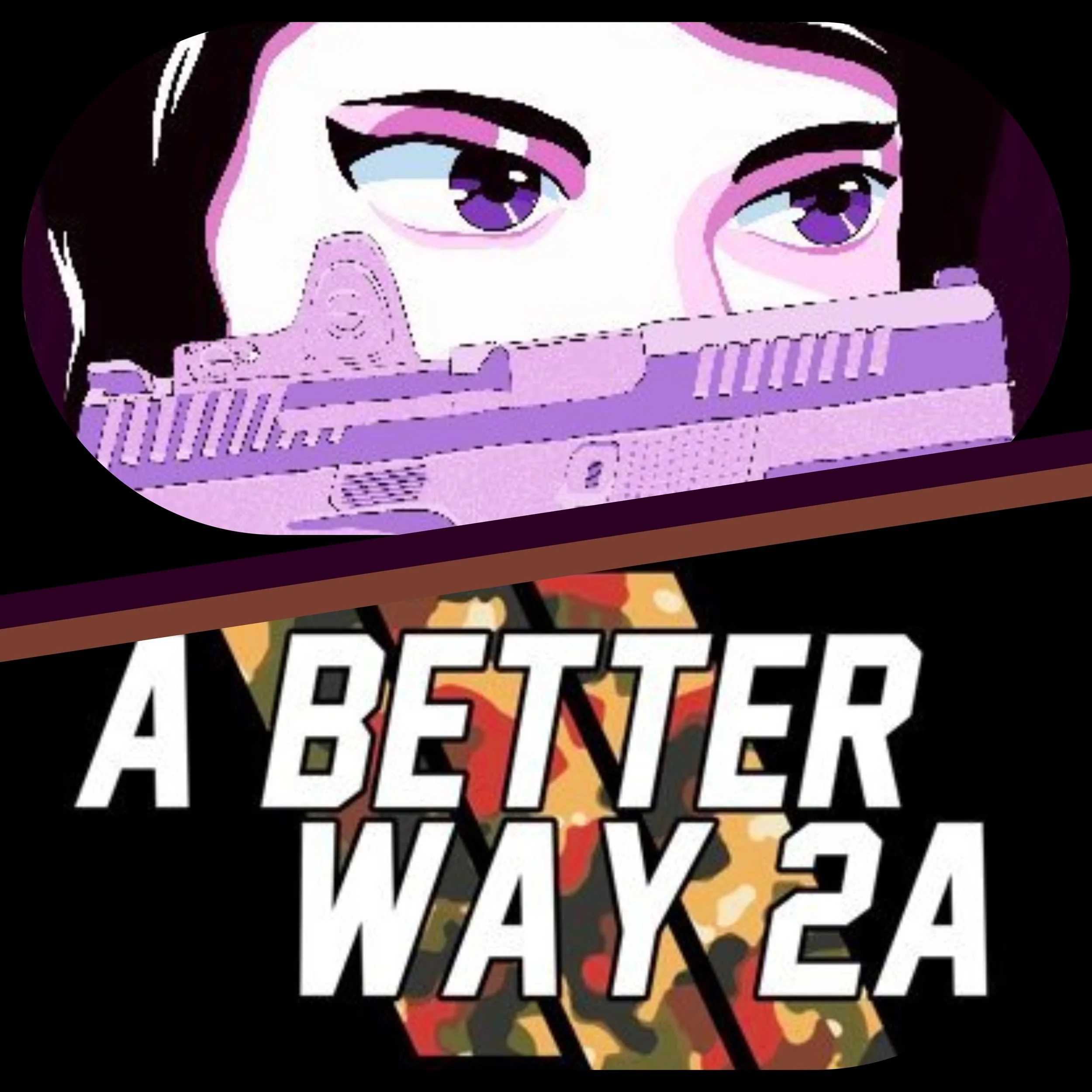
Being first-time gun owners, the natural course of action is to seek firearms education. They’ll probably consult the internet, where advice can vary wildly in quality and palatability for new gun owners. If, for the sake of simplicity, they look to the most vocal firearms spheres in the smoldering ruins of Twitter, they would find scores of sunglasses-clad men in the cabs of pickup trucks divulging their masturbatory fantasies of becoming a racist John Wick. To avoid using slurs that theoretically violate the platform’s Terms of Service, “Islamist terrorists,” “undocumented fentanyl smugglers,” and ANTIFA™ rioters serve as recurring antagonists. This experience would quickly reinforce the aforementioned stereotype of the U.S. gun owner and create the illusion that there is no space, whether physical or virtual, offering the type of inclusive firearms education that many new gun owners want or need. However, a small faction of individuals and organizations have accepted the mission of providing quality, practical firearms education for everyone, irrespective of their identity. I interviewed two of them: Jordan Levine (JL) of A Better Way 2A, an explicitly inclusive firearms education organization, and Tacticool Girlfriend (TGF), who offers comprehensive YouTube videos on the rudiments of shooting and self defense. Below is what they had to say about their work, the obstacles that new owners face to achieving competency with their guns, and gun culture as a whole, edited for clarity and length. They reveal how gun ownership and gun culture in the United States is evolving, possibly rendering the common conceptions of what it means to own a gun obsolete.
What inspired you to begin making the firearms content that you do?
JL: A couple years after the Pulse Nightclub shooting,1 I had some people who reached out to me wanting to learn to shoot and they expressed a bit of hesitancy towards taking a class from a general person in the gun community. Their perception was that, them being gay… they wouldn’t be met without judgment by the people in that class, and I didn’t realize that this was a concern that some gay people had. As a straight, cis[gender] dude, I just had never had that thought. So, I decided to make an effort to change that and to overtly go forth and say, “Hey, no, you are welcome here.” I didn’t see a lot of intentional effort to make people who did not fit the traditional norm of what the “gun owner” was feel comfortable. That’s where much of what we do stemmed from.
TGF: I had been commiserating with a lot of people about the lack of more friendly and accessible firearm content for people who are not traditional gun owners, in mainstream gun culture at least, in America. I kinda was hoping someone else would do what I did, or more people did what I did, but I just got tired of waiting to see the things that I wanted to see—like, it sounds cheesy but it’s true, to be the change in the world I want to see. I wanted to create a YouTube channel that had some really basic, no-nonsense know-how and content, and just general media in the firearms world that was not reflective of mainstream gun culture, especially for minorities who generally feel a bit more alienated from that vein of gun culture.
What obstacles do “non-traditional” demographics of firearms owners/users encounter when attempting to access mainstream, established spaces?
JL: What I hear a lot from people who do fit the norm for the traditional gun owner say is, “Gun rights are for everybody. If these people don’t feel welcome, then that’s on them, not on the rest of the community,” as if to say that because it doesn’t specify that only straight, white, cis[gender] dudes should own guns in the Constitution, everything else is okay and you’re overreacting when that’s not the case at all. I didn’t know the term “microaggression” until I started this. But having spoken to so many of these people and realizing that there is so much that can be said without using words or actions… I’ve come to realize [that how] many of these people feel is that, no, they’re not gonna kick you out, they’re not gonna say “no gays allowed,” but they’re not gonna make you feel good about being there, either. I’ve heard examples that show me that [concern] from people of color, from trans people, from gay people, from women. I’ve just heard those experiences from people… [where] it could suck for you even without being explicitly told “get out of my classroom because you’re x, y, and z.”
TGF: I feel like mainstream gun culture is, whether it’s intentional or not, gatekept effectively from people who don’t fit that [stereotypical] mold. I think that can be discouraging for people who want to access those spaces and those inroads into gun culture and knowledge. There’s maybe a stigma or a cultural barrier there for a lot of folks who can’t relate or just, frankly, find it off-putting more than anything. Those are largely the challenges. Obviously, another one would be economic challenges for anyone who is not wealthy. Guns are not cheap, the spaces are not cheap, ranges are not cheap, ammo’s not cheap. That’s a big one, too.
Beyond overt bigotry or discrimination, would you say there are problematic aspects in mainstream gun culture? What are your thoughts on the quality of advice and the emphasis on individualism versus community? What does a better alternative look like?
JL: The quality of advice has definitely improved over the last, even, five years. [After] the global war on terror, we… had a bunch of people who came out of the military and were like “I know my shit,” but they didn’t… and then you had this overhyped, military-inspired gun culture based on close-quarters combat drills and infantry tactics that were largely not applicable to civilian life. Now, we’ve gotten a ton of civilians who maybe initially learned from people like that getting into gun culture who have taken their own classes, who have started their own classes, who have really expounded on the skill set of the armed civilian, and not so much of the armed military vet passing his experience on to other people. Coming from a vet, some of the worst advice I’ve ever heard was from other vets. The quality of advice, the quality of content out there now is much better than it was, and it’s getting better.
I see that much more in left-leaning gun spaces now, the focus on community versus individualism, which is excellent. The CHAZ2 movement… was the first time I had ever seen the Left use civilian armed security to protect a “community.” As flawed as it was, we’ve learned as we’ve gone along—nobody starts knowing everything and doing everything perfectly. Since then, we’ve seen armed security at drag events, we’ve seen armed security at abortion clinics, we’ve seen people showing up to protest countless non-gun-related issues, and there are people there who are armed protecting protesters. We’ve also seen it on the Right… but I think the motivations are not so much protecting their community or protecting people who are unable to protect themselves, it’s being able to shoot back at this perceived boogeyman that they think is going to come after them. It’s more person-focused and not community-focused. I have seen more community-based actions as a result of more people on the Left becoming armed and that’s exciting to see. It’s unfortunate that it’s had to evolve like that, but I think that… [the Left] are exemplifying the purpose of gun rights and the Second Amendment perfectly.
TGF: That’s the thing about gun culture, and especially about media in GunTube3 in general. A lot of creators, a lot of people who are driving the culture, a lot of figureheads in that space often do resort to bigotry and racism, sexism, transphobia, homophobia, et cetera to signal to their base certain values, even if it’s in a passive way. The culture that is generally being perpetuated on the surface is largely behind the curve of actual skill-building and practical know-how. I do see that trend changing slowly over time, but it always feels like it’s a game of catch-up with how that information disseminates, and there is a lot of—for lack of a better term—institutional inbreeding in terms of what kind of information is being put out there. There’s just a small minority that is ahead of the curve. I try, personally, to stay ahead of that curve—that’s been hard for me… it is a unique challenge, for sure.
What we generally see in these spaces is a very strong undercurrent of individualism; it’s the continued myth of individualism, that “pull yourself up by your bootstraps” kind of mentality. I think there is merit to that, to a degree, for self-empowerment, but the community aspect is largely missing in a lot of these cases. A lot of it is decontextualized from society as a whole and, therefore, a lot of people don’t account for community in terms of being armed or being safe in general. It does seem to lazily rely, in mainstream gun culture, on the sense that the individual is the ultimate expression of power, as opposed to empowerment through community.
What is different about your approach to firearms education and firearms culture compared to mainstream spaces?
JL: I just encourage everyone, regardless of your politics, to buy a gun. Don’t buy a gun and carry it without training, but we’re going towards a really weird period in our country’s timeline where I think it’s going to be prudent for people to have the means to defend themselves because they’re not going to be able to rely on outside forms of protection. We saw this during the BLM riots, the George Floyd protests, cops were inundated and were unable to respond to homes because they were out doing what they do, for better or for worse. Cops do not have the duty to protect you… and you can’t carry a cop in your pocket at all times. Worst comes to worst, when it gets to the point where your life is threatened, you should have a way to mitigate that threat.
What I’ve seen, particularly in the gun community, is a lot of gatekeeping. I have people all the time who say, “No, trans people shouldn’t have guns. Gay people shouldn’t have guns.” There are mainstream gun accounts on Instagram that equate being trans to being a pedophile… they’ll equate being trans to having mental illness to the point of being motivated to shoot up a school because of that trans school shooter.4 Then they will go and say that because we support trans people owning guns, because we support everyone owning guns, that we are supporting school shooters. These [are] strawman arguments that are intentionally designed to discredit organizations like ours and further the narrative that trans people and other marginalized people are not responsible enough, safe enough, intelligent enough to own guns, and that’s something that I’ve seen increase dramatically over the past few years.
TGF: I feel like I take a lot less machismo in terms of how I try to present information in a way that is actually considerate in my attempt to be caring of other people’s wellbeing and safety. I talk about firearm suicide prevention and how guns aren’t necessarily for everybody—some people are not safer for owning guns. And that is a reality that we need to grapple with. Firearm suicides are the largest contributing factor to gun deaths in this country. To not cover that topic, let alone not talk about it a lot, is, I think, a huge disservice to people’s wellbeing, especially when we’re talking about protecting ourselves, hypothetically, with guns. That is a huge blind spot I see that’s missing. Even smaller things, like good practices for your own health, like mitigating lead exposure, those are all videos that I’ve covered. I do try to have some larger conversations that are outside of the skillset and the hardware, that are more wellness and social aspects of “how do you create better spaces for people to enjoy shooting in?”
What other skills or techniques would you recommend for people interested in self and community defense for whom guns are not an appealing or appropriate option?
JL: Stop the Bleed courses, one hundred percent. Over 60,000 people die a year from traumatic bleeding. We tell everyone if you’re going to learn to make holes, you should learn how to plug them. Regardless of whether or not you want to carry a gun, you should carry some sort of medical equipment in your car at a minimum. If you live in a populated enough area, things happen occasionally where having medical [equipment] is going to benefit you more times than a gun will, hopefully. You are way more likely to use your band-aid kit or have to put a tourniquet on somebody than you are to ever shoot somebody.
Community aid: if we follow root causes of violence, especially gun violence, the majority of gun violence… stems from needs not being met. Get involved in your community with an organization that does good for people—I’m not a socialist, I’m not a communist, but I recommend for people that are left-of-center or even libertarian, get involved with your local Socialist Rifle Association [chapter]. Not all of them are as active as the very active ones, but if there is one organization that I see consistently going out and doing things that actually help their community, as far as a gun-focused organization, it’s the SRA. They fix people’s taillights for free, they hand out food to the homeless, they do cold weather kits for people when it’s really cold. These are things that help narrow the margins of people who are closest to committing violence because they need something, or the perception that they need something is there.
As far as self defense goes, if you’re not into guns, carry pepper spray. Mace is a huge deterrent to people and there’s no lethality to it. It’s a significantly better option for people who are on the fence about guns and don’t really want to carry guns. It’s also great for felons, people who are unable to carry guns, people who are at a level of physical[ly] handicapped where [they] may not feel comfortable carrying a gun. There are so many different ways that you can mitigate violence, protect yourself, help your community, and be a part of making things better for the world around you if you don’t feel like owning a gun.
TGF: Whether you’re armed or not with a gun, carrying pepper spray… [is] probably the easiest self-defense tool to learn how to use, and it’s the cheapest—aside from using your bare hands, but then you have to sign up for martial arts classes. Martial arts is a really good one; you’re always gonna have your body on you, obviously, so why not learn how to use that if you can? As far as self-defense goes, I’ve never had to shoot anyone and I never want to. I do think it’s more applicable to learn some other, more commonly-resorted-to means for self-defense that are more practical in everyday use. In terms of community… finding community is always gonna be one of the most important things. How humans have evolved to survive is not by being hyper individualistic, but in fact by working together and cooperating. Not to sound trite, but just finding your people, finding your community, ensuring their safety and having them ensure yours is always gonna be a force multiplier more than any individual means would be.
Is there any parting wisdom or subject that I did not approach that you’d like to mention in relation to this topic?
JL: Try not to make assumptions about people you’ve never met. The amount of people on the Left who say, blanket statement, “The Right is bigoted and doesn’t want trans people to exist and doesn’t believe in my existence,” I have to remind them, it’s not all the Right, it’s a very small minority of the vocal far right. “The Right,” in general, is… essentially as milquetoast as liberals, like the NIMBY5 liberals who just wanna vote for the status quo and want everybody to be kumbaya and pretend that they don’t see homeless people. That is the majority of the Right, and then you have the far right that are the ones showing up to Nazi protests and the ones saying trans people are groomers and the ones saying super racist things on Twitter. And the same goes for the Right; the Right are these people who do not go outside enough and have the news on all the time and scroll endlessly… to find reasons to hate people they’ve never met in their lives or never spoken to with the intention of actually learning or understanding an issue. Everybody can benefit from trying not to make assumptions about people you know nothing about.
TGF: A lot of people are thinking more about arming themselves, more than ever from what I’ve seen. And I gotta say that you need to take a very sobering inventory of your threat assessment, your threat modeling, what you’re preparing to defend yourself with, and being realistic within your means of defending yourself. I think a lot of people find themselves locked into the same trappings of gun culture—whether or not that’s where they’re actually coming from—where they think that having a gun means that they are a safer person. And that is just not true; a gun is not a talisman. It doesn’t ward off evil because you bought something. I just don’t want people to get trapped into the idea that owning a gun makes them safer automatically. No, owning a gun makes you safer [only] if you’re not at risk of harming yourself with a gun, if you actually train with it, have it accessible, and it’s practical to use. There’s a lot that goes into that, so live within your means, as always, and take the most realistic, safe, and accessible approaches to your wellbeing in general.
1 On June 12, 2016, an ISIS-affiliated shooter killed 49 patrons at Pulse, a gay nightclub in Orlando, Florida. Evidence suggests that Pulse was targeted not because it was a gay club, but because security was lower than other possible targets, and the shooter was motivated by U.S. actions in the Middle East.
2 The Capitol Hill Autonomous Zone (CHAZ), also known as the Capitol Hill Occupied Protest (CHOP), was a short-lived protest that nominally governed several blocks in Seattle, Washington during nationwide actions in the summer of 2020 as a response to the killing of George Floyd.
3 "GunTube" refers not just to the firearms-centered video platform of the same name, but to internet firearms content in general, with an emphasis on YouTube.
4 On March 27, 2023, a shooter killed five people, including three children, at The Covenant School in Nashville, Tennessee. It was later determined that the shooter was a transgender man. Since then, numerous mass shooters have been incorrectly described as transgender in early speculation.
5 NIMBY stands for “Not In My Back Yard,” and refers to people, who are normally older and politically liberal, that support progressive reforms in theory, but whose support disappears when it becomes clear that the reform may require them to engage with the underprivileged. The classical example is someone that supports the construction of a homeless shelter, as long as it’s “not in my back yard.”
Gun ownership and gun culture are changing in the United States. To be clear, mainstream gun owners still exist and show no sign of abruptly disappearing. However, a parallel community of gun owners is growing, encouraged and educated by the likes of Jordan Levine and Tacticool Girlfriend. They have an opportunity to align the demographics of gun ownership with the demographics of the country as a whole while simultaneously addressing some of the ills of mainstream gun culture. They, too, asked our original question: who is the type of person to use a gun? Increasingly, the answer seems to be “anyone.”
If you’re interested in the content of either A Better Way 2A or Tacticool Girlfriend, you can find them on YouTube under these account names. You can also find them perennially shadowbanned on Instagram at @abetterway2a and @tacticoolgf, respectively.
Citations
Bunn, Curtis. 2022. “Why more Black people are looking for safety in gun ownership.” NBC. June 14, 2022.
https://www.nbcnews.com/news/nbcblk/black-people-are-looking-safety gun-ownership-rcna32150.
Greenberg, Zoe. 2025. “The queer people who are buying guns to prepare for Trump’s America.” The Philadelphia
Inquirer. January 5, 2025. https://www.inquirer.com/identity/guns trump-lgbt-philadelphia-20250105.html.
Schaeffer, Katherine. 2024. “Key facts about Americans and guns.” Pew Research Center. July 24, 2024.
https://www.pewresearch.org/short-reads/2024/07/24/key-facts-about americans-and-guns/.
Toppa, Sabrina. 2023. “As extremist threat rises, Latino Texans say gun ownership is ‘matter of survival.’” The
Guardian. August 7, 2023. https://www.theguardian.com/us news/2023/aug/07/latino-texas-guns-owners.
Ward, Julie, Rebecca Valek, Vanya Jones, and Cassandra Crifasi. 2024. “Reasons for Gun Ownership Among
Demographically Diverse New and Prior Gun Owners.” American Journal of Preventative Medicine 67 (5) (November): 730–739. https://doi.org/10.1016/j.amepre.2024.06.026.